Smart Metering
Make your electricity usage easier to understand.
A suitable smart meter turns electricity use into readings you can see over time. We help households, estates, businesses and operators find a metering option that fits their site, then make the data easier to access.
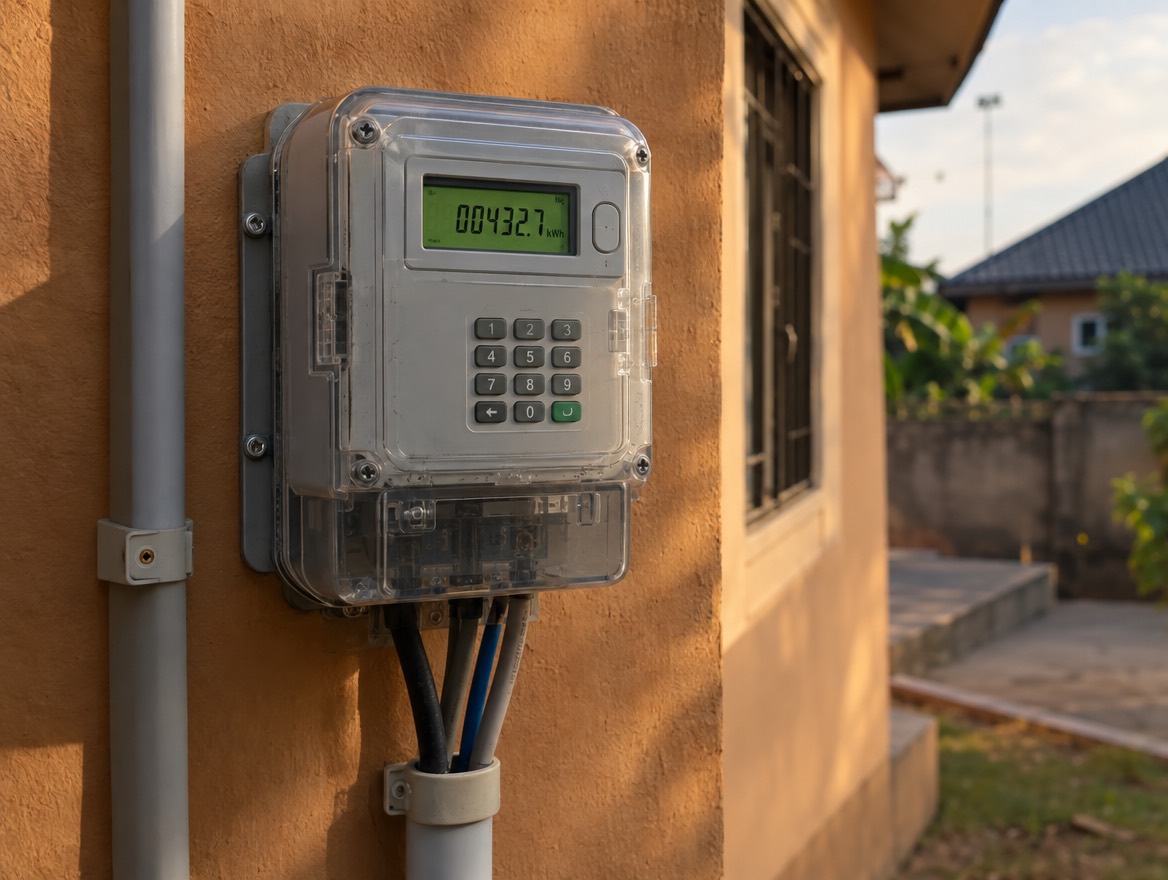
The problem
Many customers only see a balance or a monthly figure. Without readings over time, it is hard to know what drives consumption, whether a meter is working, or when credit is about to run out. Operators face the same gap across hundreds of premises.
What we propose
-
Compatible smart meters
Subject to assessmentWe will recommend meters that can share their readings with our platform. Whether a single-phase or three-phase meter suits your premises is something we assess with you — we are not yet offering specific products.
Meter specifications, prices and availability will be published only once products and suppliers are confirmed.
-
Consumption readings and history
Initial focus · in developmentSee electricity use in kWh by day, week or month, with a timestamp on every reading so you know how current the data is.
-
Prepaid balance monitoring
Integration dependentWhere a prepaid meter and its vending system allow balance data to be read, show the remaining credit alongside recent use.
-
Low-credit and device alerts
Initial focus · in developmentIntegration dependentNotify you when a meter stops communicating, and — where balance data is available — when credit falls below a level you choose.
-
Installation through approved partners
PlannedWe plan to arrange installation through qualified, approved installation partners, following site assessment. Partner arrangements are not yet in place.
-
After-sales support
PlannedA clear route for reporting faults and getting help, connected to our managed support process.
See Managed Support.
Three kinds of measurement — and why they differ
Before recommending anything, we check what you need to measure.
Consumption monitoring
Measures how much electricity your premises uses. This is what most of our proposed metering focuses on.
Utility billing
The meter your electricity supplier uses to charge you. A monitoring meter does not replace a utility billing meter unless the relevant supplier has approved it.
Generation metering
Measures electricity produced, for example by solar panels. A consumption meter does not measure generation; that needs a suitable generation meter or inverter integration.
How a compatibility assessment works
Tell us about your site
Premises type, current meters, supply sources (grid, solar, generator) and what you want to see.
We check compatibility
Whether existing meters can share data, and what new equipment, communication access or integrations would be needed.
We propose an option
A recommendation that states its assumptions and dependencies, so you can decide with clear information.
What it depends on
- The meter’s data capabilities and communication method.
- Access permissions from the meter owner, supplier or operator.
- For balance data, access to the relevant vending or payment system.
- Verified partner credentials, meter specifications and installation arrangements before any sale or deployment.
For households
A suitable meter could show your consumption history, make usage easier to understand and alert you to device issues. The right meter and its installation depend on an assessment of your premises and supply.
About cost estimates
Any estimate of what your electricity costs will state the tariff it assumes. Tariffs vary, so an estimate is a guide, not a bill.
Check what would work for your site
Tell us about your premises and current meters. We will explain the options and what they depend on.